What Is the Rule of 3 in Bonsai?

Why the Rule of 3 matters
Bonsai is the intersection of horticulture and visual art. Beyond pruning and wiring, composition governs how convincing and engaging a bonsai appears. The Rule of 3 provides a clear framework that helps beginners and intermediate growers avoid common mistakes — overcrowding, symmetry that looks artificial, or a flat appearance that lacks depth. This method encourages staggered branch placement and measured progression from trunk base to apex, producing trees that read naturally from any viewing angle.


Why the Rule of 3 works (visual design and horticulture)
- Odd-number preference: In art and visual design, odd numbers (particularly three) often create more pleasing compositions than even numbers. Three points form a triangle, which is inherently stable yet dynamic.
- Natural mimicry: Trees in nature rarely display perfect symmetry. Branches spiral and stagger as they compete for light; arranging primary branches in thirds echoes that growth habit.
- Layered depth: Placing a branch in the back third gives depth and a sense of space, preventing the tree from appearing flat.
- Manageable workflow: Dividing the tree into lower, middle and upper thirds gives you a sequential approach to styling — establish a strong base, build the body, then refine the apex.

The three thirds explained
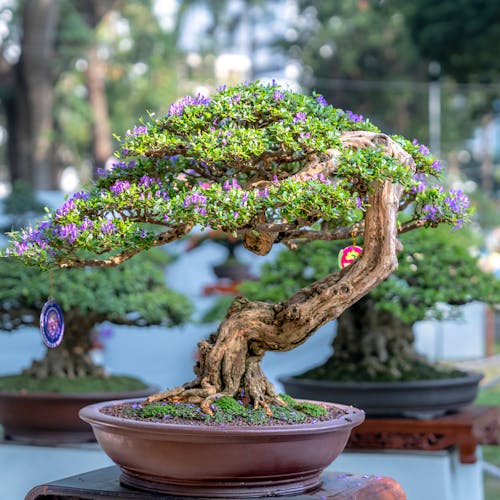
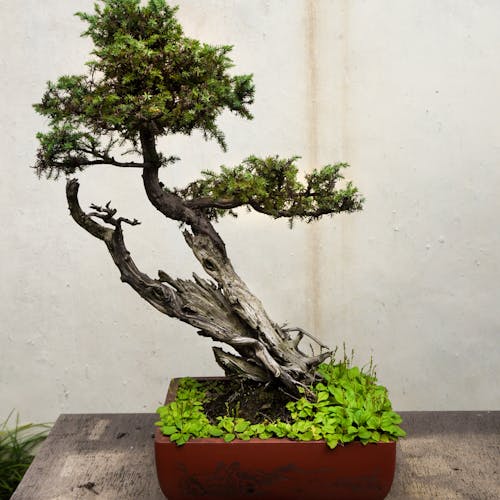
- Lower third (base and nebari): This section represents stability and age. Focus on roots, trunk taper and the first major branches. A well-resolved lower third gives the tree weight and presence.
- Middle third (primary branching): The middle third is the tree’s heart — where main branches create the silhouette. Proportion and branch thickness are crucial here.
- Upper third (apex and fine ramification): The top third provides the finishing touch and sense of maturity. It should be lighter in visual weight and show progressive taper and finer twigs.


Step-by-step: applying the Rule of 3 to a bonsai
1. Choose the front view
Turn the tree until you identify the front — the side with the best nebari and trunk line. The Rule of 3 presumes a primary viewpoint.
2. Mark the thirds on the trunk
Visually divide the trunk height into three roughly equal sections from nebari to the expected apex. Use temporary markers (string or erasable tape on a training pot) if helpful.
3. Position the first major branch (lower third)
Place the primary lower branch roughly at the lower-third line. It should be substantial enough to balance the trunk but not overpower it — ideally around one-third the diameter of the trunk where it joins.
4. Add the second major branch (middle third)
The second branch should be higher and on the opposite side or slightly rotated around the trunk. This alternation creates balance without symmetry.
5. Place the third major branch (upper/back third)
The third key branch should be placed toward the back or side to open up depth. This could be located in the upper third or slightly behind the middle third depending on style.
6. Continue the spiral
Carry on placing subsequent primary branches following a spiral or alternation around the trunk, keeping the thirds principle in mind for spacing and visual weight.
7. Refine ramification and taper
Once primary branches are placed, refine secondary and tertiary branches, maintain taper toward the apex, and ensure branches reduce in thickness appropriately.

Branch thickness guideline
Practical examples by species (tips for common bonsai types)
- Chinese Elm: Fast ramification allows you to place multiple branch orders; start with the lower third and wire progressively lighter as you move up.
- Ficus: Use the Rule of 3 for branch placement but watch for aerial roots and leaf size; keep the upper third airy to allow light in.
- Juniper: With informal upright or windswept forms, emphasise a strong lower-third branch and a back branch for depth — prune foliage pads to support the thirds visually.
When to bend or break the Rule of 3
- Growing character: Some trees naturally develop an odd form or a dominant single trunk line; bending the rule may enhance uniqueness.
- Formal styles: Strict formal upright or formal styles may require different rhythmic branch spacing; use thirds as a reference rather than a rule.
- Pot placement/composition: The Rule of 3 applies to form and branching rather than exact pot positioning — a tree placed off-centre in its pot can still follow thirds structurally.
- Creative intent: Advanced artists often intentionally break the rule to create tension, drama or a specific narrative.

Common mistakes and how to avoid them
- Too symmetrical: Avoid placing branches directly opposite each other at the same height — this reads as contrived. Use alternation and spiral placement.
- Crowding at one level: Resist placing too many thick branches in the same third; spread them vertically and around the trunk.
- Ignoring taper: Thirds won’t rescue a tree with poor taper. Develop trunk taper first via pruning, wiring and trunk-chopping techniques.
- Overcompensating with foliage pads: Don’t rely solely on foliage pads to create the illusion of thirds; ensure branch skeleton supports the form.
Styling workflow using the Rule of 3 (practical session)
- Assess nebari and trunk line — choose the front.
- Lightly sketch or mark thirds.
- Select candidate branches for primary positions; if none exist, create them by training shoots.
- Wire and position primary branches with appropriate angles.
- Step back frequently — rotate the tree to check three-quarter and rear views.
- Once satisfied with primary structure, refine secondary ramification and foliage pads.

Maintenance and long-term development
- Revisit the thirds each growing season. As the tree thickens and grows, branch relationships change; you may need to reposition or sacrificially prune branches to maintain thirds balance.
- Patience: Achieving convincing thirds, especially on young material, can take years. Prioritise trunk development and nebari early.
To Sum Up
Try applying the Rule of 3 to your next styling session — start by marking the thirds and placing the first three primary branches. If you need tools, explore Bonsaii’s selection of wiring pliers, branch cutters and training pots to help you shape and refine your tree. Join our newsletter for step-by-step styling projects and seasonal care tips.