How to Grow Bonsai Trees

Growing Bonsai: A Practical Guide
Growing bonsai is a blend of horticulture and artistry: it requires patience, observation and regular maintenance, but it is accessible to any keen UK gardener. Whether you want a hardy outdoor bonsai such as a native hawthorn or field maple, or a subtropical indoor specimen like a ficus, understanding the fundamentals of cultivation, styling and care will dramatically increase your success. This guide focuses on practical, British-climate advice: choosing species suitable for the UK, propagation and purchasing options, step-by-step styling techniques, and seasonal care to keep your bonsai thriving year after year.


Why bonsai succeed or fail in the UK
The UK’s temperate maritime climate is ideal for many deciduous and evergreen bonsai species but presents challenges for tropical varieties and for overwintering shallow-rooted pots. Key success factors for UK growers include selecting climate-appropriate species, using the right soil mix, protecting pots from frost, and adapting watering to our variable weather. With the right approach, British growers can achieve excellent results both indoors (in conservatories or bright windows) and outdoors on patios and sheltered spots.

Choosing the right species for the UK
Outdoor-friendly, hardy species
- Field maple (Acer campestre): tolerant to pruning and excellent autumn colour.
- Hawthorn (Crataegus monogyna): traditionally British, good blossom and rugged bark.
- Scots pine (Pinus sylvestris): classic conifer style, hardy and long-lived.
- Hornbeam (Carpinus betulus) and beech (Fagus sylvatica): good for deciduous, seasonal interest.
- Cotoneaster and rowan (Sorbus aucuparia): attractive fruiting bonsai options.
Indoor/subtropical choices (suitable only if you can provide warmth and light)
- Ficus retusa/benjamina: forgiving and common for indoor bonsai.
- Serissa, Carmona and some tropical azaleas: require stable indoor conditions.
Tips for UK growers
- Choose species matched to where you intend to keep the tree. Outdoor bonsai must spend winter outdoors; moving them indoors for the season can stress or kill them.
- Select local or similar-climate species where possible — native trees are often easier to keep healthy in UK conditions.


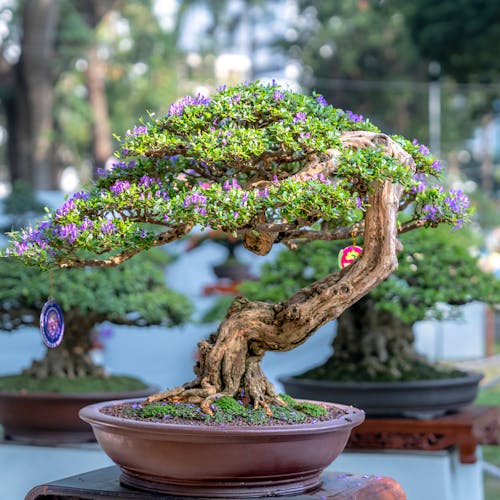
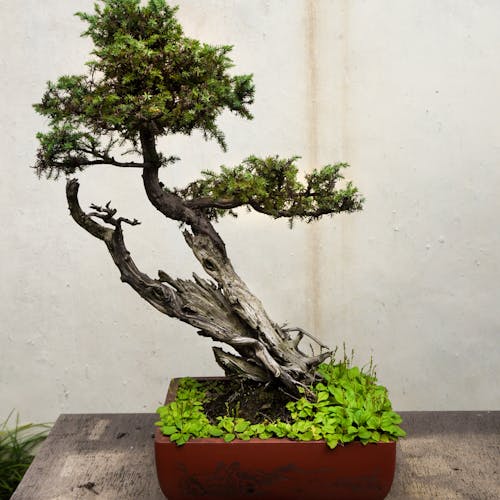
How to obtain a bonsai: seeds, nursery stock, pre-bonsai and collecting
- Buying ready-made bonsai: quickest but costliest. Good for gifting and immediate display; often older trees come with a premium price.
- Pre-bonsai and nursery stock: these are partially trained plants or young trees that respond well to styling and are more affordable.
- From seed or cuttings: economical and educational. Expect 3–5 years before substantial styling is possible.
- Collecting from the wild or hedgerows: potentially free and rewarding, but requires permission, careful root pruning and aftercare. In the UK, check protected species and seek landowner consent.
- Bonsai starter kits: ideal for beginners; usually include a young plant, pot, basic tools and soil — great for learning basics without heavy investment.

Potting and soil essentials
Soil mix: Bonsai need free-draining, aerated substrate. A typical UK-friendly mix:
- 20–40% akadama or loam-based component (or John Innes No.2 adapted for bonsai),
- 30–50% grit or pumice for drainage,
- 10–30% organic compost or leaf mould for moisture retention (reduced for conifers).
Pot selection: choose shallow pots with drainage holes. Match pot size to tree age — small enough to restrict root growth but large enough to support health.
Repotting frequency: most young bonsai benefit from repotting every 1–3 years; older specimens every 3–5 years. Spring, when buds swell, is usually best in the UK.
Step-by-step: how bonsai trees are grown (practical cultivation and training)
1. Establish the root system
- When using nursery stock or pre-bonsai, inspect roots and remove pot-bound circling roots.
- Shorten long roots and tease out the root mass to encourage a compact fibrous root system.
2. First styling and wiring
- Decide a primary style (formal upright, slant, windswept, broom, literati) based on the tree’s natural form.
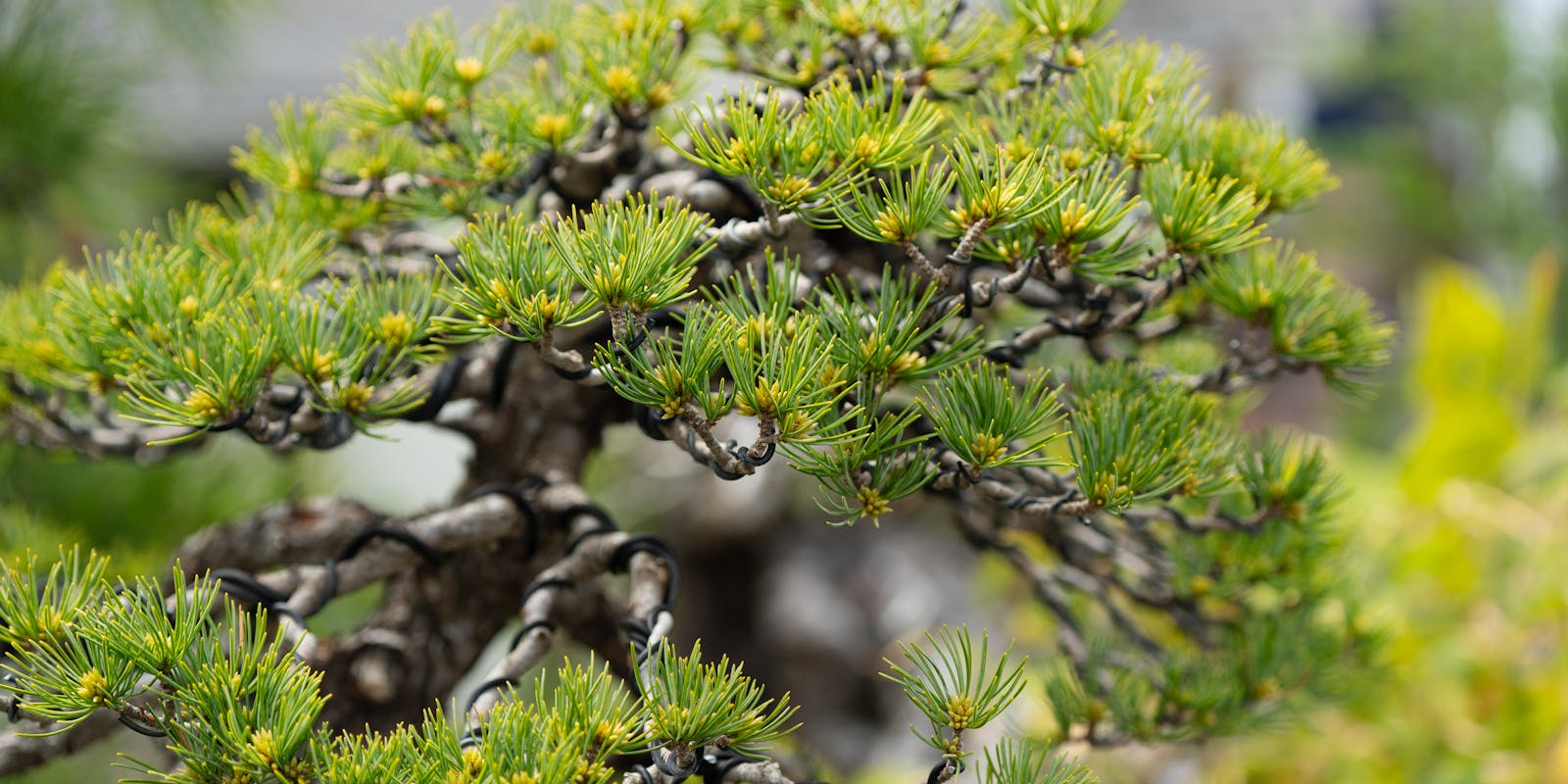
- Use aluminium or annealed copper wire; aluminium is simpler for beginners. Wire from trunk to branch tip, taking care not to wrap too tightly.
- Bend gradually; do not force branches into extreme angles — work in stages to avoid damage.
3. Pruning
- Structural pruning to remove unwanted branches and create the basic silhouette is done in late winter to early spring for deciduous species; evergreen pruning can be staggered through the growing season.
- Use concave cutters for thicker branches to produce a clean wound for better healing.
- Leaf-pruning (defoliation) on certain species can reduce leaf size and increase ramification but must be used sparingly in the UK climate.
4. Potting and anchoring
- Position the tree in its chosen pot. Use mesh over drainage holes and secure the tree with anchor wires through the pot to prevent movement.
- Backfill with your chosen bonsai mix and water thoroughly to settle the soil.
5. Aftercare
- Shade young and recently repotted trees from harsh afternoon sun.
- Water deeply when required — check soil moisture rather than adhering to a rigid schedule.

Watering, feeding and seasonal care for UK climates
Watering
- Frequency varies with species, pot size, soil mix, and weather. In the UK’s variable climate, check daily during hot spells; in cooler, damp periods less frequent watering will be required.
- Water thoroughly until water runs from drainage holes; this ensures the entire rootball is wetted.
- Avoid prolonged waterlogging which causes root-rot.
Fertilising
- Use a balanced, low-dose fertiliser through the growing season (spring to early autumn). Slow-release granules or dilute liquid feed are both suitable.
- Reduce feeding in late autumn to allow trees to harden for winter dormancy.
Winter protection
- Many UK gardeners protect bonsai from severe frost by placing pots in a sheltered, unheated greenhouse, cold frame or against a south-facing wall. Do not keep hardy outdoor bonsai in heated rooms for winter.
- Insulate pots on very cold nights using bubble wrap around pots or by moving pots into a frost-free, ventilated shelter.
Styling techniques: pruning, wiring and shaping
Pruning strategy
- Always prune with the tree’s long-term form in mind. Remove crossing branches, inward-growing shoots and branches that spoil balance.
- For deciduous trees, major pruning is best in late winter while the tree is dormant. Minor pruning and maintenance can be done during the growing season.
Wiring tips
- Use tape or raffia to protect thin bark from wire damage when necessary.
- Check wired branches monthly in active seasons and remove wire before it starts to bite in; reapply if further shaping is needed.
- Wiring is a gradual art; aim for natural curves rather than forced shapes.
Jin and shari (advanced)
- Creating deadwood features adds age and character to certain species (e.g. pine). These techniques require tools like a carving knife, wire brush or lime sulphur and should be practised carefully.

Propagation methods: seeds, cuttings and air-layering
- Seeds: sow in spring, but remember seedlings grow slowly. Good choice for patient growers and heritage specimens.
- Cuttings: quicker than seed for many species (e.g. cotoneaster, box). Use rooting hormone and a free-draining compost; warmth and humidity improve success.
- Air-layering: used to create a new tree from a branch, useful for species that don’t root easily from cuttings. Commonly done in late spring or early summer in the UK.
Troubleshooting common problems in the UK
- Yellowing leaves: could indicate over-watering, poor drainage or nutrient deficiency.
- Pests: scale, spider mites and aphids can affect bonsai, especially indoors. Regular inspection and gentle insecticidal soap treatments help control outbreaks.
- Fungal diseases: root-rot from waterlogged soils and mould on compacted surfaces. Improve drainage and repot with fresh mix if needed.
- Winter dieback: inadequate hardening or bringing hardy trees indoors. Always keep hardy outdoor species outdoors to maintain dormancy.
Practical ten-step beginner project (grow a simple field maple bonsai)
- Choose a young field maple from a UK nursery or pre-bonsai source.
- Inspect roots; remove damaged roots and shorten long ones.
- Select a shallow bonsai pot and fix mesh over the drainage holes.
- Position and anchor the tree using aluminium wire through the pot.
- Backfill with a gritty John Innes mix adapted for bonsai.
- Do light structural pruning to establish a primary leader and main branches.
- Apply gentle wiring to shape main branches; do not over-wire.
- Place in a sheltered, sunny spot with morning sun and afternoon shade.
- Water thoroughly when the topsoil dries; feed with dilute fertiliser from spring to early autumn.
- Repot in 2–3 years, continuing training and gradual refinement of shape.
To Sum Up
How bonsai trees are grown is a practical, seasonal process that rewards observation and measured intervention. For UK gardeners, success hinges on choosing the right species, using appropriate soil and pots, and adapting watering and winter protection to our variable climate. Start small, learn through a single starter project, use Bonsaii courses and community forums for guidance, and enjoy the deep satisfaction of guiding a living tree through the years.